
ToBeAI turns scattered logs, metrics, traces, and alerts into a verifiable root cause narrative, complete with traceable evidence and suggested actions.
Contact
Automated root cause analysis for SRE equipment
Your SRE team doesn't lack data. It lacks synthesis.

Incidents don't fail due to a lack of data, but due to a lack of synthesis.
SRE teams manage a daily volume of signals that is impossible to process manually at the speed required by incidents. Logs with different semantics, infrastructure metrics, APM traces, Checkmk alerts: each source speaks a different language.
The result is always the same: time wasted correlating data manually, incorrect assumptions, unnecessary escalations, and slow resolutions that have a real cost to the business.
ToBeAI doesn’t add more data to the problem. It solves it through synthesis.
- Fragmented Signals: Logs, metrics, APM, and alerts arrive with different semantics and no automatic correlation between them.
- Lack of Operational Context: Without knowing the application alias or namespace, searches are generic and the results irrelevant.
- Slow Manual Synthesis: The operator manually correlates what a specialized agent can resolve in seconds, with complete traceability.

Two capabilities. One agent.
ToBeAI operates on the real data from your observability or monitoring platform. No additional integrations. No cloud data.
AI-Assisted Root Cause Analysis
When an incident occurs, ToBeAI autonomously navigates the investigation workflow: it identifies the affected entity, retrieves relevant signals, correlates events over time, synthesizes the findings, and generates a report with recommended actions.
The result is a verifiable narrative, not an assumption. Every conclusion is supported by evidence.
Natural language query on your observability data
The operator formulates open-ended questions in natural language. ToBeAI converts these into secure queries on available sources and returns verifiable responses, including relevant sources and events for the operator to audit.
Access is role-based. Available tools are limited according to user permissions.
From hypothesis to evidence. Always in that order.
ToBeAI's research workflow avoids intuitive leaps that lead to erroneous diagnoses. Each step depends on the previous one and produces a verifiable output.
- Application Discovery: The agent identifies the affected entity using the application alias and operational namespace, avoiding generic cluster searches.
- Signal Query: Retrieves logs, metrics, APM traces, alerts, and Checkmk data for the relevant period and entity.
- Time Correlation: Cross-references signals on the time axis to identify what occurred first and what was a consequence, separating cause from symptom.
- RCA Synthesis: ToBeIT's specialized agents analyze and correlate the available information to build a well-founded root cause hypothesis.
- Report and Suggested Actions: Generates a persistent report in JSON, Markdown, or HTML with the findings, evidence, and recommended actions for the operator.
Full coverage across all your sources of observability.
- Logs - 92%
- Metrics - 84%
- APM - 78%
- Alerts - 71%
- Checkmk - 64%
Illustrative values of functional coverage. Productive metrics are fed from inventory and real results.
Automation gains speed without expanding operational permissions.
ToBeAI operates in read-only mode by default. No agent can perform destructive actions on the cluster. Tool access is restricted by role, and all results are normalized before entering the synthesis process.
- Read-only by default: Policy applied to all automated flows. No operation can modify the environment without explicit human intervention.
- Permissions per agent: Each agent receives only the subset of tools it needs for its role. No lateral access.
- Persistent evidence: All reports are persisted in JSON, Markdown, or HTML under a report repository that is auditable at all times.
- Operational taxonomy: Fields and datasets are resolved using ToBeAI’s own knowledge before querying the cluster, avoiding dangerous or exposed searches.
ToBeAI operates on an infrastructure certified by BSI under the most demanding international standards.
- ISO/IEC 27001:2022 · Information Security
- ISO 22301:2019 · Business Continuity
- ENS · National Security Framework (coming soon)
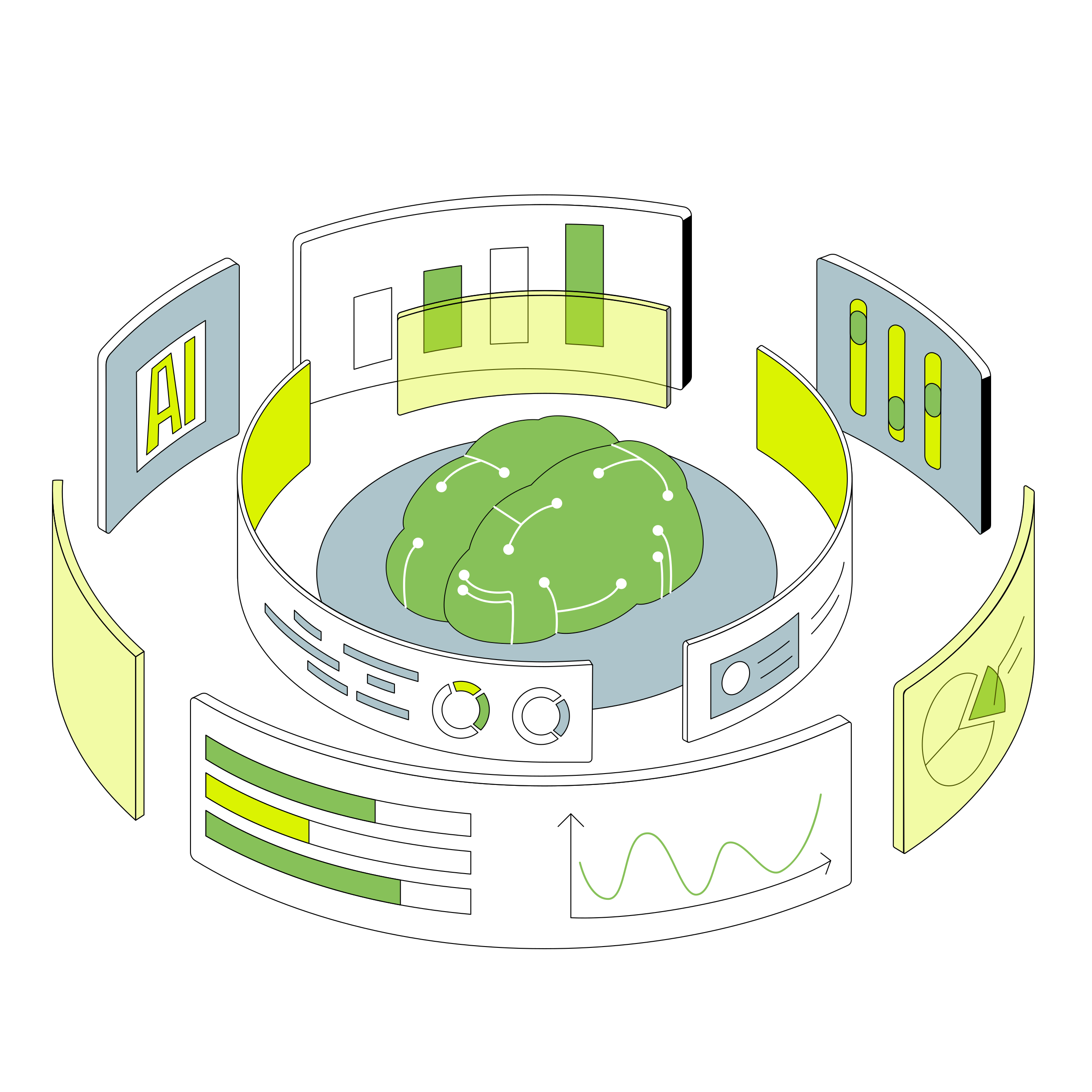
One flow. Three surfaces of use.
- API – Structured Response: FastAPI exposes agent results in a structured format, integrable with any existing incident management or ITSM system.
- React Operational Console: Dedicated view for the SRE operator with a visual representation of the findings, eliminating the need to redo the investigation for each query.
- JSON/MD/HTML Reports: Each investigation generates persistent and auditable artifacts. Useful for post-mortems, incident documentation, and quality review.
Operate the assisted RCA without losing control.
ToBeAI is designed for SRE teams that need speed in incident resolution without sacrificing traceability and operational control. No cloud data. No destructive permissions. Evidence at every step.
Contact
Contact our specialists to assess your project.
Request information or, if you prefer, call us at 937 377 773 / 910 604 006.